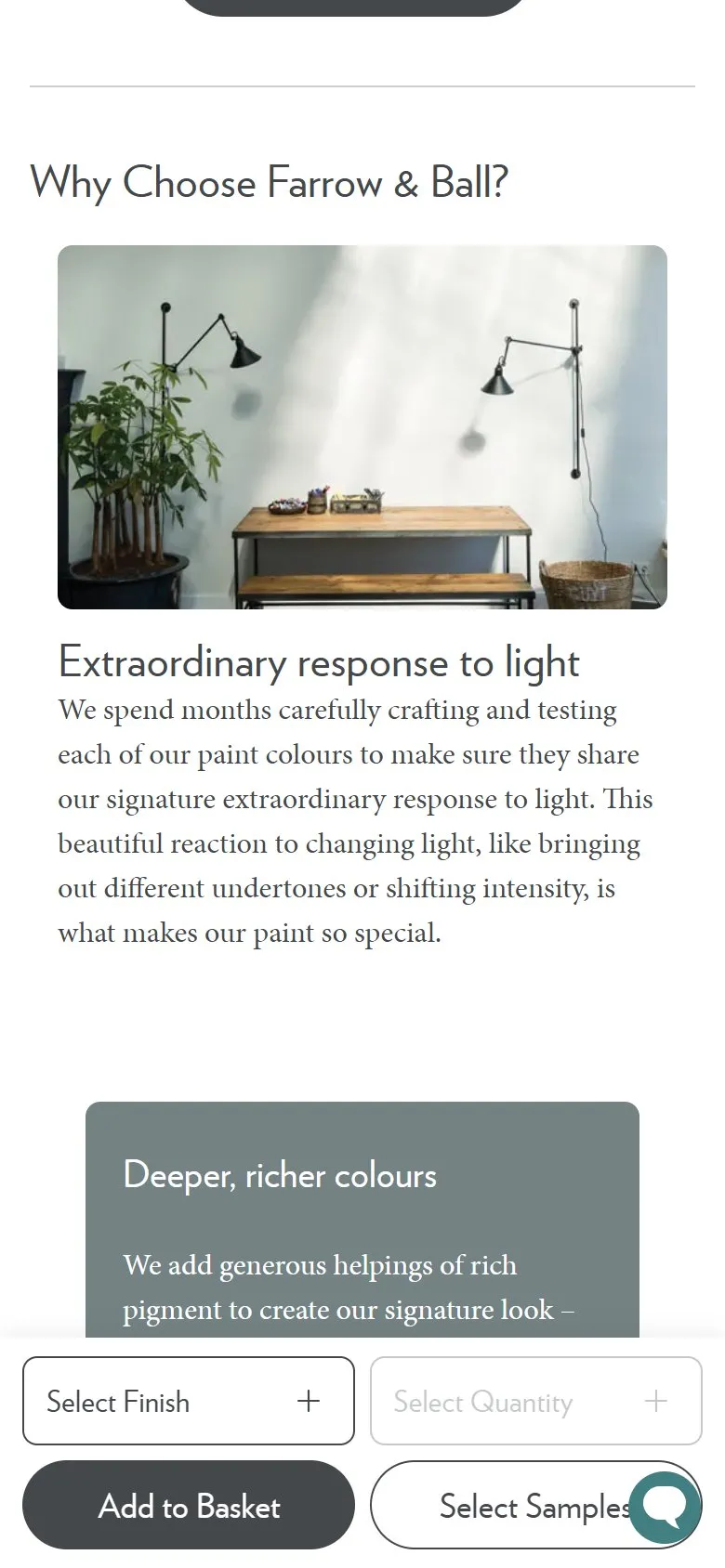
Detailed product information below the add to basket
What they do
Under the buy box the page keeps going. A short origin line for the shade ("inspired by the soot and tarnished brass of traditional candle snuffers, this is a green interpretation of our beloved Inchyra Blue"), then a Why Choose Farrow & Ball block of five sections on light response, ingredients, pigment load, being made in Dorset and responsible sourcing, then a piece arguing why the colours cannot be colour-matched, then three Product information accordions: Water Based and Toy Safe, Quality Finishes and Safety Information. The commercial detail is machine-readable too, with Product schema listing every finish and size as its own offer, from the £5.95 sample pot to £81 for 2.5 litres.
Why it works
Most paint pages are a swatch, a price and a delivery promise, which gives a search engine nothing to rank and a language model nothing to quote. This one answers the questions people actually type, why the paint costs what it does, whether it's safe around children, whether a mixing shop can copy it, and answers them on the page that ranks rather than in a blog post three clicks away. The accordions are what keep that volume of copy from burying the buy box, since the words are present for a crawler and folded away for a shopper who doesn't want them. The structured data does the rest, because a page that states its own prices per finish is easy to summarise accurately when the summary is written by a machine.
Makes sense when
Considered purchases where the objections are known and repeatable, and especially where AI answers are starting to sit in front of the category. Write to the objection rather than the keyword, fold the long copy into accordions so the page still converts, and make sure the structured data agrees with what the page says.
More like this
More product patterns
Want this on your store?
I'll tell you which of these patterns will move organic revenue for your catalogue, and which to skip.
Book a discovery call