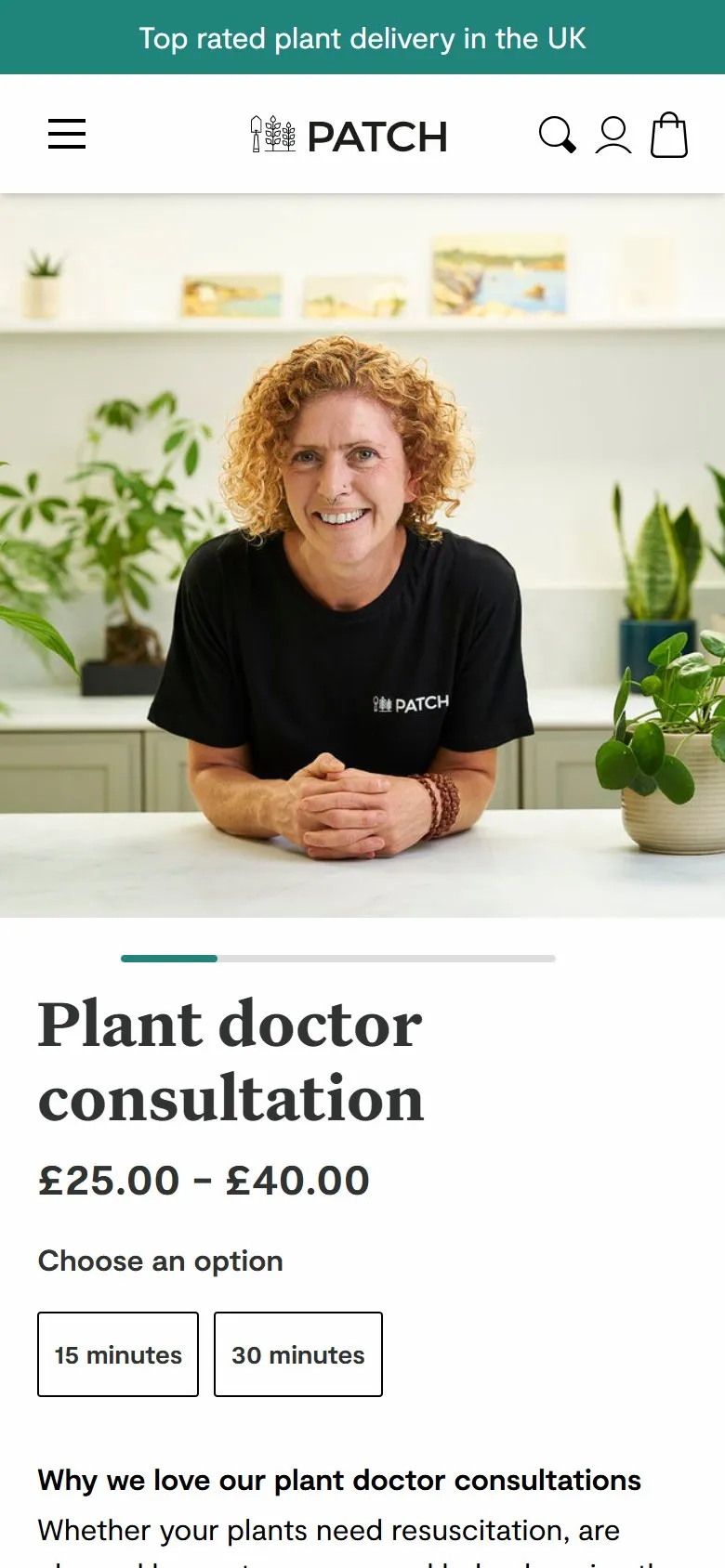
Expert advice sold as a product, and shown off on the homepage
What they do
Patch sells a "Plant doctor consultation": £25 for a 15-minute video call or £40 for 30 minutes with Kelly Dyer, described as an RHS-trained horticulturalist. The page covers what you get: the session is recorded so you keep the advice, you get a £5 voucher for your next order, the booking is valid for 12 months, and it can be bought as a gift ("a thoughtful gift for those serial plant killers out there"). On the homepage, "Chat to our Plant Doctor" gives Kelly a photo, a paragraph and two customer quotes. The same expertise runs through the rest of the site: the "Why Patch?" section offers a free plant-parenting course and care guides, the Plant care menu lists the consultation, and the indoor plants intro links to it.
Why it works
Most people will never book a call, but knowing a qualified expert is there makes a first plant feel less risky, so the homepage section works as trust for everyone who reads it. For those who do book, charging for it makes it valued rather than a freebie, and the £5 voucher brings them straight back to buy. The recording means the advice outlives the call. Selling it as a product rather than a contact form means it sits in the menu, can be gifted, and has a page that can rank in its own right.
Makes sense when
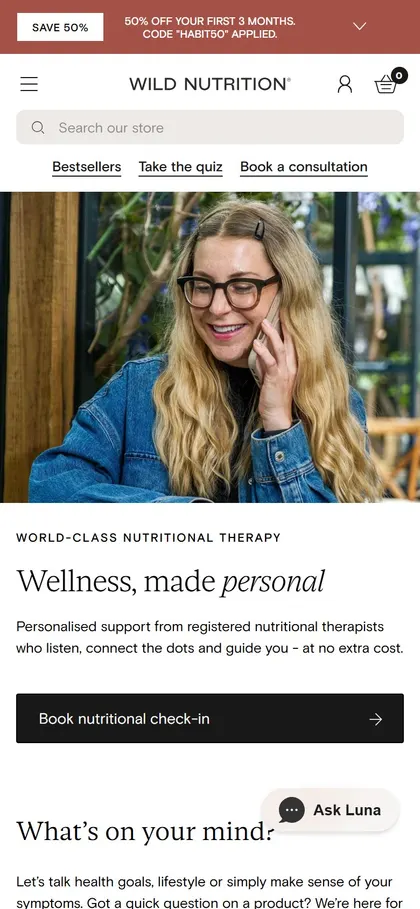
Customers are afraid of getting it wrong, and you've got a real expert with a name and a qualification you can show. Paid works when the advice is worth paying for; free works better as a sales step for high-value items, which is Wild Nutrition's and Farrow & Ball's route on this board. Either way, show the person and real customer quotes, not a generic "our experts".
Want this on your store?
I'll tell you which of these patterns will move organic revenue for your catalogue, and which to skip.
Book a discovery call